Drone wind turbine inspection — screening ahead of close inspection and NDT
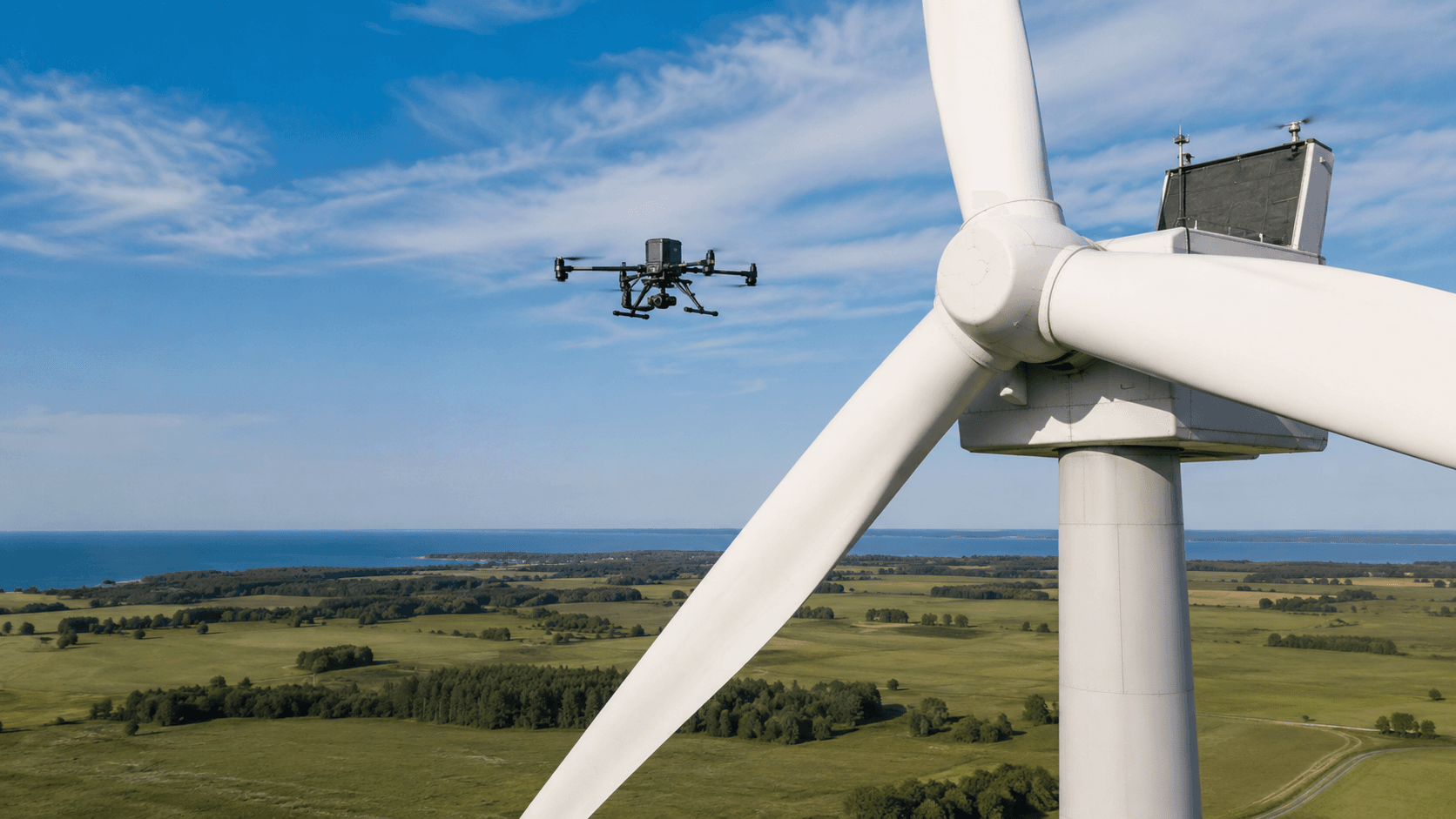
A clearly located observation is more useful than an unreferenced image of a rotor blade. For wind turbine owners and service teams, drone-based screening is therefore about creating structured information: which turbine, which blade and which area need follow-up?
Screening can be a first step in an inspection programme, but it should not be described as a general certificate of health for the wind turbine.
What does screening mean?
In this context, screening means a defined review that identifies and documents areas for further assessment. The scope can include visible surfaces on rotor blades, towers and nacelles. The surfaces that can actually be reviewed need to be agreed during planning and stated in the report.
The client should make clear whether the objective is an initial condition overview, follow-up of known observations or information ahead of a service visit.
How does screening differ from non-destructive testing?
NDT stands for non-destructive testing. It includes several methods used to examine materials without destroying the component, such as ultrasound and specific thermographic methods. Sandia's work demonstrates why method selection and verified detection capability matter in blade investigations. Read the Department of Energy's description of the research.
A conventional drone image of the surface is not equivalent to an examination of the blade's internal structure. Nor should passive thermal images from a drone be equated with validated active thermographic testing. An absence of visible indications does not mean that every type of defect has been ruled out.
Make the report useful to the next specialist
We recommend agreeing the report requirements with the organisation receiving the results. For each observation, the documentation should state:
- the turbine and blade identity,
- the side and agreed zone on the blade,
- an overview image and a detailed image,
- a description of what is actually visible,
- uncertainties, coverage and image limitations,
- a proposed further assessment.
If dimensions are given, the measurement method and uncertainty should be stated. An estimated dimension in an oblique image must not be presented as an exact measurement.
Plan with the operations team
Access, weather, flight safety and the turbine's operating state need to be coordinated before the project. Do not assume an inspection can be carried out while the rotor blades are moving. The conditions must be approved for the specific approach.
When is the method relevant?
Screening is relevant when you need a documented overview or location information ahead of the next inspection. If serious damage is suspected, the responsible operations team should assess the need for action immediately; it should not wait for a routine screening visit.
UAS Inspect's wind turbine screening is scoped around the question and the recipient's report requirements. Discuss the information your service team needs.