
Solar PV thermography — why production data is not enough
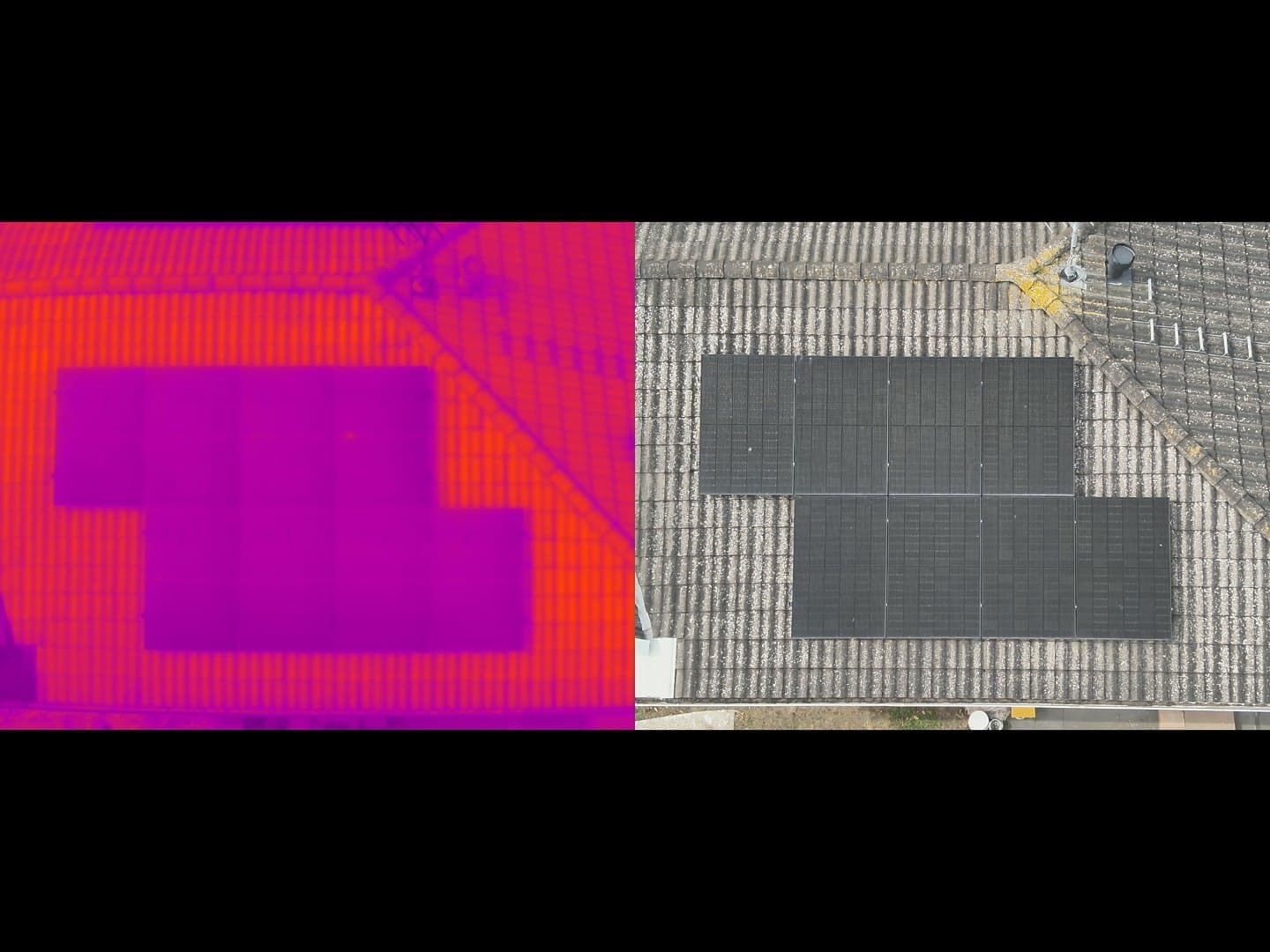
A solar PV installation can produce electricity while individual parts still need inspecting. For solar PV companies, property owners and operations teams, production monitoring and physical inspection therefore provide complementary information. One shows how the installation performs over time. The other helps you investigate what is happening on site.
What does thermography show?
Solar PV thermography uses a thermal camera to examine temperature patterns on modules. Local hot areas, often called hotspots, and unusual patterns can warrant closer inspection. The method can be used during normal operation and complements visual inspection and electrical measurements. However, a thermal image alone does not establish the cause of a deviation. IEA PVPS describes how IR inspection is used alongside other investigation methods.
Why combine images with operating data?
Operating data needs to be interpreted according to what is actually measured. An overall production curve provides a different level of detail from monitoring individual strings or modules. Start by asking: can we locate the problem using the information we already have, or do we only know that the output differs from expectations?
A practical approach is to collect operating logs, document the affected modules and link the images to the installation drawing. This lets the service team follow the same issue from detection to reinspection.
Commission information you can use further
Ask for more than a folder of thermal images. Useful documentation should state:
- which installation, module or part of the roof the observation concerns,
- an overview image and a closer image of the same area,
- what has been observed and what remains uncertain,
- the conditions during the inspection,
- the recommended next check and its priority.
An illustrative example: a module appears different in the thermal image. Replacing it is not automatically the next step. First, the observation needs to be compared with the conventional image and, if necessary, followed by targeted troubleshooting. The report's value lies in making this transition clear.
Operational inspection is part of maintenance
The Swedish Energy Agency recommends regular checks and follow-up to ensure that an installation produces as intended. The inspection approach needs to suit the installation and its maintenance instructions. Read the agency's guidance on operation and maintenance.
For a portfolio of installations, it is sensible to use the same report structure without necessarily applying the same inspection interval to every installation.
Do you need thermography or a broader inspection?
If the question concerns temperature deviations, a targeted thermal inspection may be appropriate. If you also need to review mounting, documentation and other installation issues, a broader scope is needed. Read the guide to independent solar PV inspection.
UAS Inspect helps you define the scope of solar PV inspections and organise observations for further servicing and follow-up. Discuss your installation or portfolio.