
Building thermography — when does thermal analysis improve decision support?
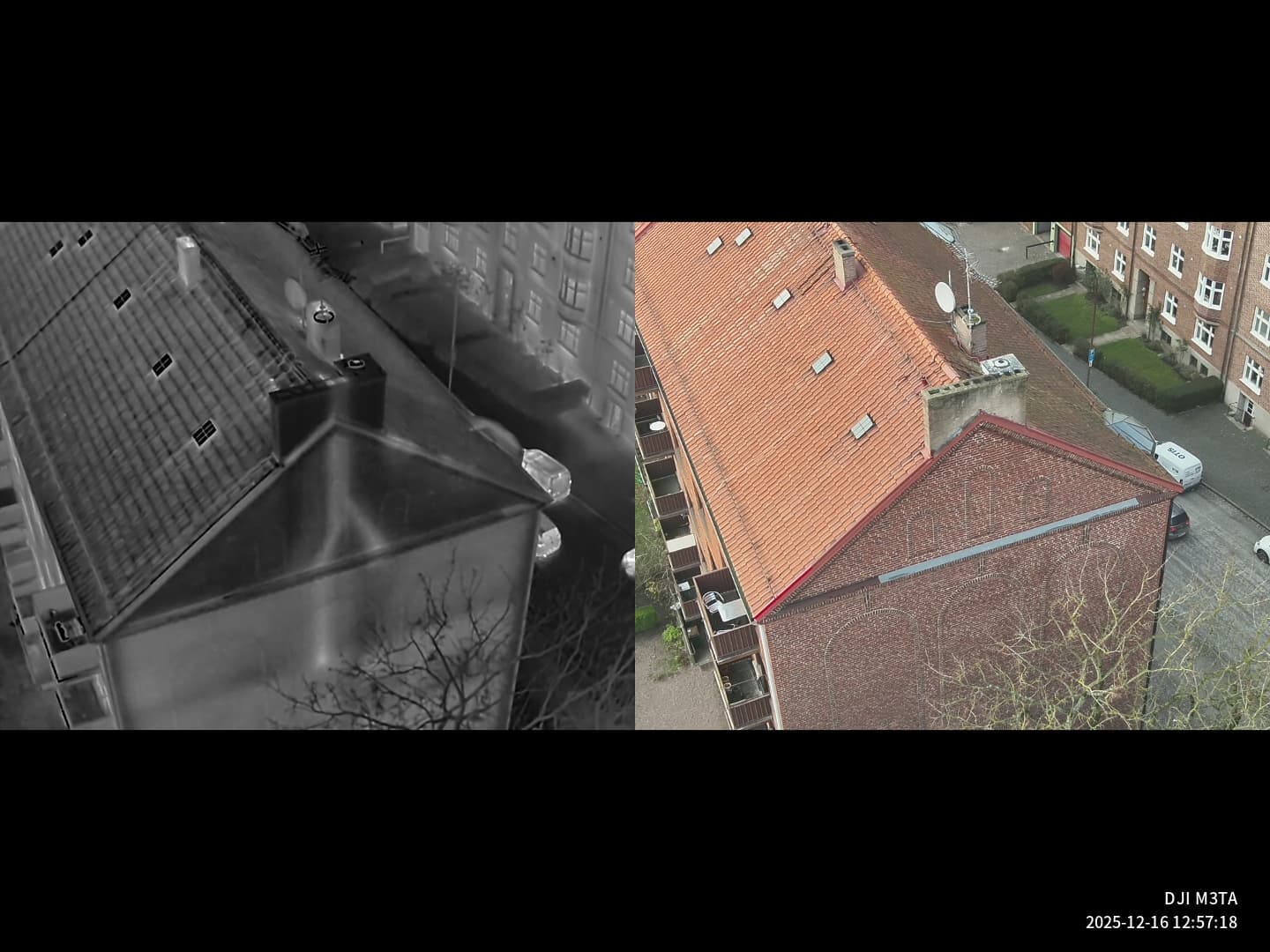
Building thermography is useful when temperature patterns can help define a technical question. For a property manager, the key issue is not how colourful the thermal image is, but what it helps the organisation do next.
A good brief therefore starts with the problem: a recurring complaint, an area requiring investigation or uncertainty ahead of planned maintenance.
A thermal camera does not see through a wall
A thermal camera records infrared radiation from visible surfaces. Temperature patterns can provide clues, but the camera does not automatically measure moisture content or provide a finished diagnosis. FLIR describes, for example, how moisture-related temperature patterns need to be followed by verification using moisture measurements. Read FLIR's guidance.
It is therefore appropriate to write “moisture indication requiring verification” when the evidence is insufficient to establish moisture. The same caution is needed when other causes can produce similar patterns.
Choose the method according to the question
Thermal inspection is not an identical task for every property. Ask what conditions the investigation requires and whether additional documentation from inside the building is needed. A facade survey and a solar PV module inspection should not be commissioned on the assumption that the same measurement conditions automatically suit both.
Ask the report to describe the conditions and what could not be assessed. Inadequate measurement conditions should not be turned into a confident conclusion through more sophisticated image presentation.
The business value lies in the next decision
We recommend linking thermography to a defined workflow:
- Describe the problem and collect previous information.
- Identify the relevant areas and methods.
- Document observations with both overviews and details.
- Decide which indications need verifying.
- Use the verified assessment in action planning.
An illustrative example is an unusual area at a roof junction. The report should show exactly where it is and suggest how it should be followed up. It should not merely provide a red marking labelled “leak”.
What should you require in the report?
Ask for conventional images alongside thermal images, clear location information, inspection details and separate descriptions of observations and conclusions. Temperature readings need to be interpreted in context.
Do not request an exact energy saving based on a thermal image alone. An investment calculation needs more evidence than a temperature pattern. Likewise, a targeted thermal inspection is not an energy performance certificate or a complete building survey.
UAS Inspect offers building inspections with visual and thermal analysis when the method suits the question. For solar PV installations, there is a separate guide to solar PV thermography.
Describe what you need to clarify, so the inspection scope can be adapted to the decision you need to make.