
Drone building inspections — comparable checks across multiple assets
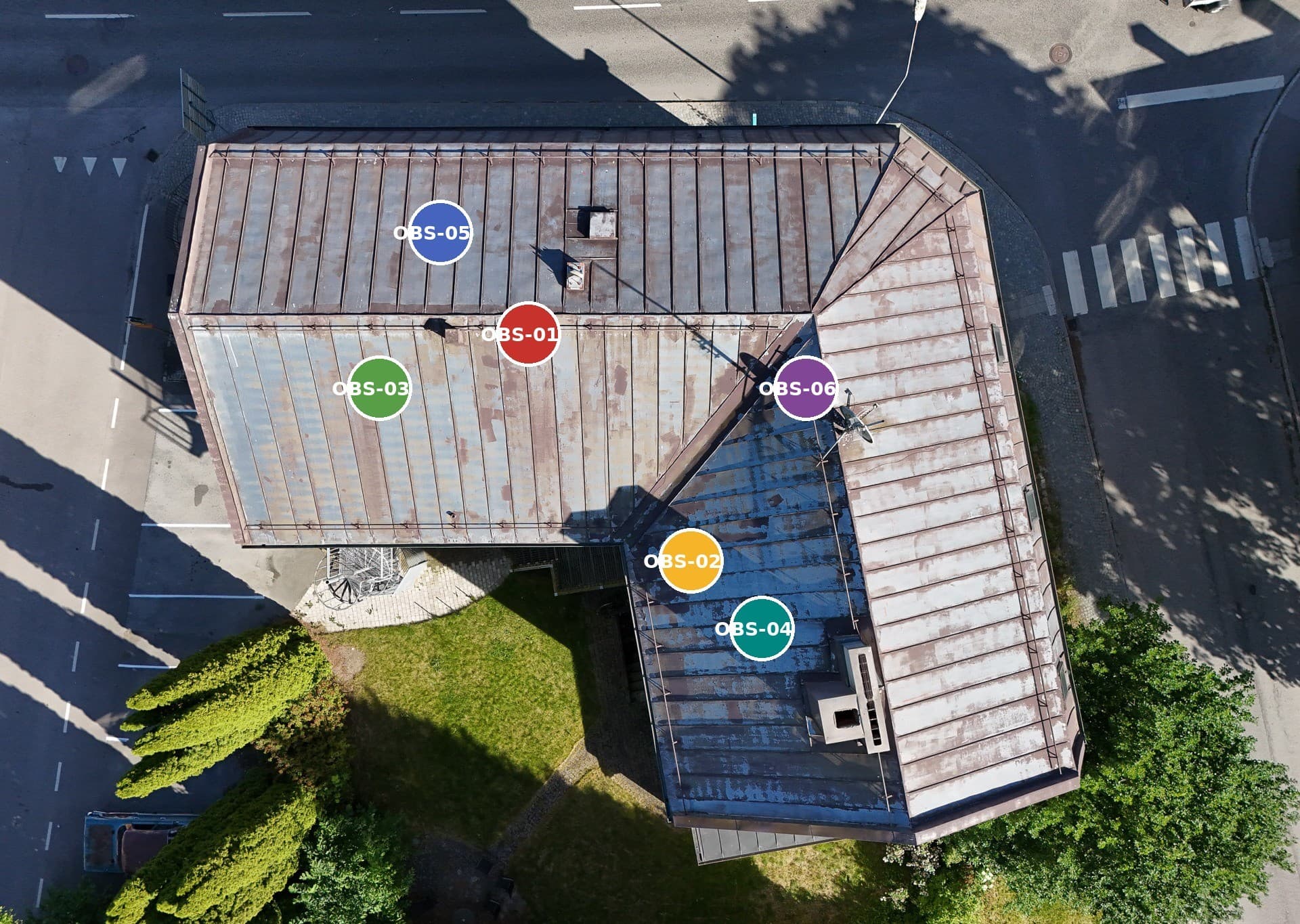
When a property company commissions roof and facade inspections for several buildings, the results need to be comparable. Otherwise, each report risks becoming a separate project, with different terminology, different priorities and images that are difficult to find again.
We recommend agreeing on the inspection structure before data collection starts. A shared method makes it easier to transfer the results into technical property management, maintenance planning and procurement.
Start with the decision the report should support
Do you need to assess which roofs require closer investigation? Plan facade maintenance? Or follow up a number of known defects?
The question determines which building elements need documenting and in how much detail. Do not simply commission “drone photography of all properties”. Describe the decisions you want to be able to make afterwards.
Create a shared asset list
Give each property and building a clear ID. Add the address, contact person, relevant drawings and known problems. Also mark which parts are included, such as roof slopes, facades, roof drainage and penetrations.
It is better to discover an unclear building boundary before the inspection than after the reports have been delivered. For large portfolios, we recommend a pilot asset where the client first approves the report format.
Distinguish observations from assessments
Each finding should contain four clear elements:
- Observation: what is visible in the image?
- Location: where is the area?
- Assessment: what might the observation mean, and how certain is the conclusion?
- Next step: what should be checked or repaired, and with what priority?
“Discolouration at a penetration” is an observation. “Confirmed leakage” is a much stronger conclusion and needs supporting evidence. The report should not make claims that are more certain than the evidence allows.
Agree on how prioritisation will work
Use the same terms across the portfolio, but define what they mean. A follow-up point should not be confused with confirmed damage. State both how urgent the follow-up is and whether the assessment needs verifying on site.
One suggested approach is “prompt assessment”, “planned action”, “further investigation” and “monitor”. The categories need to fit your property management process, rather than being presented as a universal standard.
Also describe what has not been inspected
A drone-based image inspection is not a complete assessment of everything behind the facade or beneath the roof covering. Ask the report author to mark obscured, inaccessible and unassessable areas. Any need for close inspection, measurement or another specialist investigation should be stated.
At UAS Inspect, property portfolio inspections can cover one asset or several buildings using the same report structure. See an example building report and learn how to build a history for maintenance planning.